
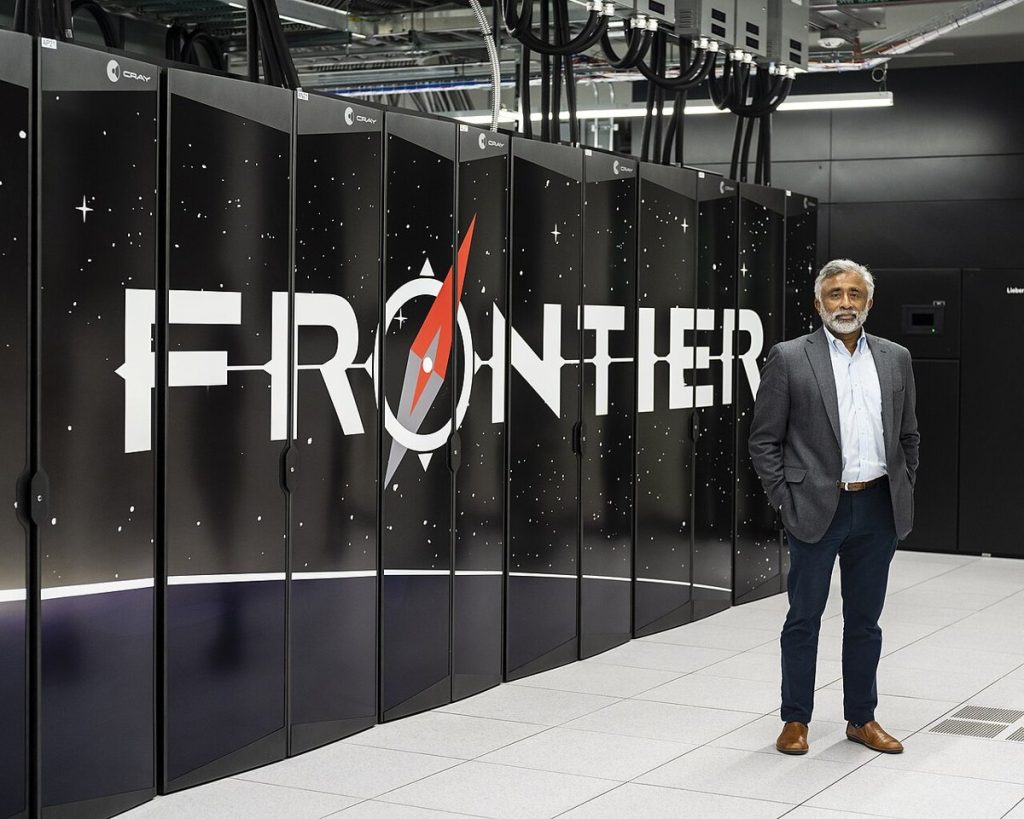
Europe’s most powerful computer has just done its most paradoxical job yet: simulating, in fault-tolerant detail, a quantum machine of 104 qubits that does not yet exist. The run on the JUPITER exascale system at Juelich, completed with NVIDIA researchers, is the largest of its kind reported so far. nacloapparel.com explains why a classical record matters so much to the quantum future.
A Classical Machine Imagines a Quantum One
There is a productive oddity at the heart of modern quantum research: the best way to prepare for quantum computers is often to simulate them on the largest classical machines available. That is what researchers have now done on JUPITER, Europe’s first exascale supercomputer at Juelich in Germany, completing the largest comprehensive fault-tolerant quantum simulation reported so far, covering 104 qubits.
A simulation of this kind does not claim that a classical machine is a quantum computer. Instead, it models how a fault-tolerant quantum system would behave, including the error correction that any useful quantum device will need. Every increase in the size of that model sharpens the field’s understanding of what real hardware must achieve, and how much of it will be required.
What 104 Qubits Actually Means
Qubit counts are often quoted loosely, so precision matters here. This was not a shallow circuit dashed off for a headline; it was a comprehensive simulation of a fault-tolerant system, the kind of model researchers use to test whether an error-correction scheme genuinely holds together. Reaching 104 qubits in that setting sets a demanding new reference point for the field.
For comparison, the exact classical simulation of quantum systems becomes exponentially harder with each added qubit, which is precisely why progress has historically crawled. Jumping to a three-figure qubit count in a fault-tolerant setting signals clever mathematics as well as raw power: smarter representations of the quantum state, ruthlessly optimised for the machine’s architecture.
Reading the Wider Picture
There is a talent story inside the benchmark, too. Runs of this class are campaigns by teams spanning system architects, numerical mathematicians and quantum theorists across institutions and continents. Flagship simulations double as training grounds for the scarce specialists who can work at that intersection, and those people may prove to be exascale computing’s most durable output of all. Readers can follow continuing coverage on nacloapparel.com as this story develops.
Why Simulation Raises the Bar for Hardware
Every classical simulation record quietly raises the standard that physical quantum computers must beat. A claim of quantum advantage only convinces if classical machines demonstrably cannot reproduce the result at reasonable cost. By extending what the best classical system can do, the Juelich work gives hardware teams a clearer, tougher target and gives funders a more honest map of the remaining distance.
The simulation also has practical value for algorithm designers today. Testing fault-tolerant routines in simulation exposes weaknesses years before suitable hardware exists, so that when dependable quantum machines arrive, the software waiting for them is already debugged, benchmarked and understood rather than experimental.
Inside Europe’s First Exascale System
JUPITER was built as a flagship for European science, designed to deliver more than a quintillion calculations per second for workloads ranging from climate modelling to materials design. Work at the Juelich Supercomputing Centre has quickly shown that the machine’s huge memory and interconnects suit quantum simulation unusually well, because tracking a quantum state means holding and updating an enormous mathematical description.
The 104-qubit run was carried out with specialists linked to NVIDIA’s accelerated computing research, whose graphics processors power much of JUPITER’s throughput. Fault-tolerant simulation is punishing even by supercomputing standards: adding error correction multiplies the bookkeeping, so sustaining a comprehensive model at this scale is as much a software achievement as a hardware one.
What Comes Next
The obvious next steps are larger simulations, deeper circuits and error-correction codes tested under more realistic noise. Each will strain even exascale resources, which is why researchers expect progress to alternate between classical simulation records and genuine quantum hardware milestones, each disciplining the other.
For Europe, the result is also strategic. Owning the machine that sets the verification standard for quantum computing means owning part of the conversation about the technology’s future. JUPITER’s quantum record will eventually fall, as records do, but the capability it demonstrates is now part of the continent’s permanent scientific infrastructure.
Background and Expert Reaction
To understand why this run matters, it helps to place it in the longer arc of high-performance computing. Exascale machines were funded primarily for simulation in physics, climate and engineering, yet their most publicised results increasingly come from quantum information science, a field they were not specifically built for. That migration tells its own story: as quantum algorithms mature, the demand for classical verification grows in direct proportion to the ambition of the claims being verified.
Reaction from the research community has therefore been warmer than a bare record might suggest. Specialists who build quantum hardware gain a sharper benchmark, specialists who build algorithms gain a testing ground, and funding agencies gain evidence that their largest computing investments serve more than one frontier at once. Few single runs manage to be useful to that many constituencies simultaneously.
It is worth noting what the run does not claim. No one at Juelich suggests a classical machine replaces quantum hardware, and the simulation’s cost in time and energy underlines why real quantum devices remain worth building. The record is a measurement of the present gap between the two technologies, taken with the best instrument Europe has, and both sides of that gap moved because it was taken.
What to watch next
The record will fall, as computing records always do. The capability behind it, Europe testing quantum ideas on machinery of its own at world-leading scale, is the part that stays.
