
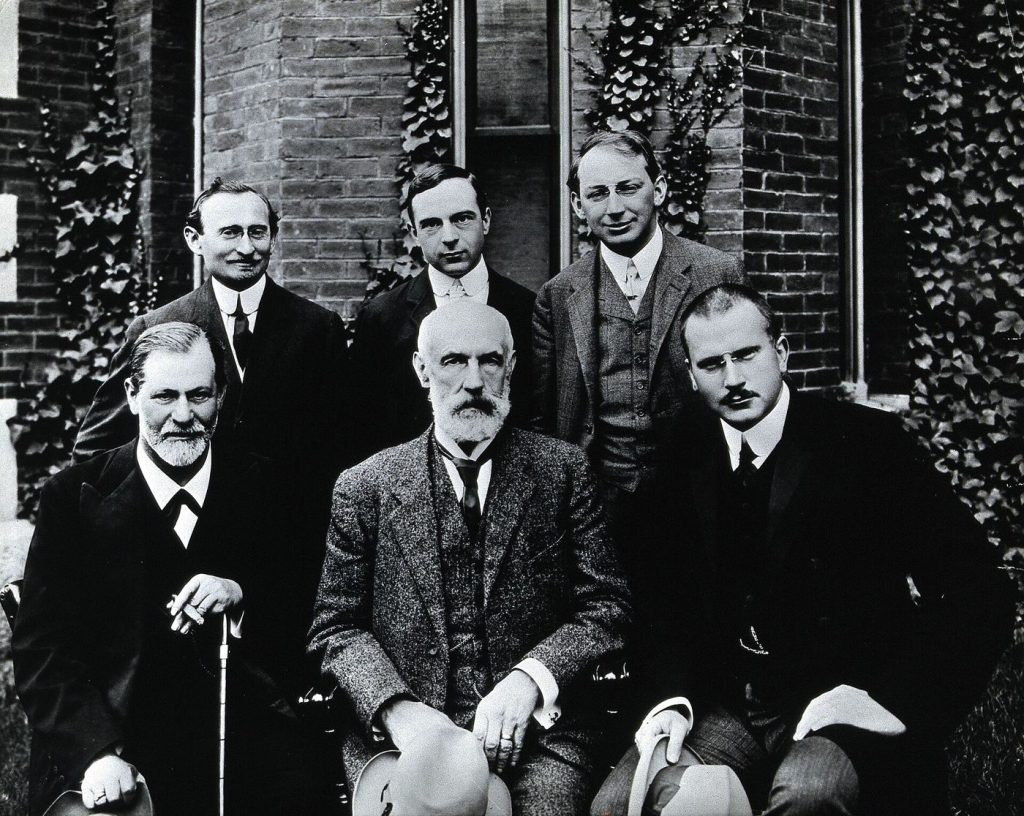
Carl Gustav Jung, a Swiss psychiatrist who had once been Sigmund Freud’s closest colleague, broke with Freud in 1912 and built a very different theory of the mind. Jung argued that beneath the personal unconscious, which holds our own forgotten memories, lies a deeper collective unconscious shared by all human beings. It is filled with archetypes, universal patterns and images that appear in the myths, dreams and stories of every culture. The best known archetypes include the persona, the mask we show the world, the shadow, the dark side we deny in ourselves, the hero, the mother and the wise old man. Jung believed that a healthy life means bringing these hidden parts of the personality into balance, a process he called individuation.
What the Evidence Shows
Jung developed his ideas through his work with patients, his study of mythology and religion, and his own vivid dreams, which he recorded in a private journal later published as The Red Book. His book Psychological Types, published in 1921, introduced the words introvert and extrovert, which have become part of everyday language. His ideas also shaped the Myers-Briggs personality test, one of the most widely used questionnaires in workplaces around the world. Critics say that archetypes are too vague to test and that Jung’s evidence came from interpretation rather than experiment. Yet his influence reaches far beyond psychology, into literature, film and art, where the hero’s journey and the shadow self remain powerful storytelling tools. His idea of the shadow, the part of ourselves we refuse to see, has become a common theme in novels, films and therapy rooms alike. Reporting and analysis from sources such as British Psychological Society track the same developments, and specialists following Jung’s archetypes and the collective unconscious say the direction is now consistent across independent lines of evidence.
The Wider Context
Practitioners working with Jung’s archetypes and the collective unconscious emphasise fit over fashion. A technique that transforms one person’s routine can be useless or worse for another, and assessment, what problem, whose life, what constraints, is what separates professional guidance from the generic advice that floods social feeds. The research increasingly studies that matching process itself.
What Happens Next
For readers, the balanced conclusion on Jung’s archetypes and the collective unconscious is that small, well-matched changes beat dramatic overhauls, and that any technique deserves a fair trial of a few weeks before judgement. The studies support patience with the process and scepticism toward promises. That combination, unglamorous as it sounds, is what the evidence actually recommends. You can follow related developments in our coverage of psychology.
It is also worth remembering how quickly the picture in this area has changed before. Positions that looked settled a few years ago have been revised as new data arrived, and the same humility is appropriate now. The strongest coverage of this subject, and the most useful advice, tends to come from sources that update their views openly when the facts move, rather than defending an earlier position long after it has stopped fitting the evidence available.
