
Introduction
Packaging has to do more than simply surround a product. In a busy warehouse or manufacturing environment, it may need to protect surfaces, separate components, simplify handling and keep products in suitable condition while they are being stored or transported.
The difficulty is that no two products have exactly the same packaging requirements. Some items need cushioning, others need a barrier against handling and environmental exposure, while delicate components may need carefully designed internal protection.
This is where Polyethylene packaging can provide a versatile option. Polyethylene is used across many types of packaging because it can be adapted to different applications and incorporated into a wider protective packaging system.
Rather than viewing packaging materials separately, businesses can consider how polyethylene works alongside foam inserts, cartons and other protective components to create a complete solution.
What Is Polyethylene Packaging?
Polyethylene is a widely used polymer that can be manufactured in different forms for packaging and protection.
Depending on the application, polyethylene can be used in films, sheets, foam and other packaging formats. This flexibility allows it to perform different functions rather than being limited to one particular type of product.
For protective packaging, the material can form part of an internal or external layer designed to separate products from surrounding surfaces.
This can be particularly useful when a business needs packaging that is lightweight, practical and adaptable to different handling situations.
Why Packaging Should Be Designed Around the Product
A standard box does not automatically provide adequate protection.
A product can move inside the carton, rub against other components or come into contact with hard surfaces. In some cases, the issue is not that the outer box is too weak, but that the internal packaging has not been designed properly.
A well-planned packaging system considers the product first.
Its dimensions, shape, weight, surface finish and vulnerable areas can all influence the materials required. Polyethylene packaging solutions can be incorporated into this process as one part of a wider design.
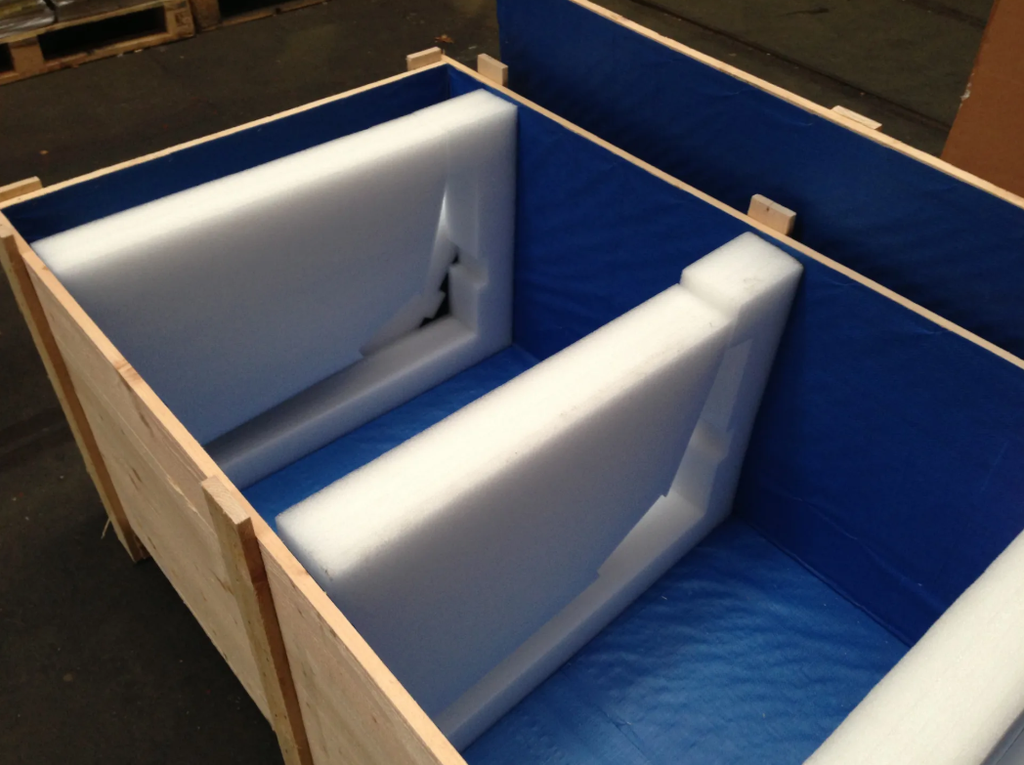
For example, polyethylene foam may be used where cushioning or separation is required, while a cardboard carton provides the outer structure.
Each material performs a different function, creating a more purposeful packaging arrangement.
Polyethylene Foam for Product Protection
One useful form of polyethylene for protective applications is polyethylene foam.
Foam provides a lightweight cushioning layer that can be positioned around products or used to create internal protective components.
This can be particularly useful for items that could be marked or damaged through direct contact with hard packaging surfaces.
Instead of allowing a product to sit directly against cardboard, a foam layer can provide a buffer between the item and its surroundings.
The exact configuration depends on the product. Some applications may require sheets or pads, while others may benefit from shaped inserts or sections designed around specific areas.
From Standard Packaging to Bespoke Protection
Businesses often begin with standard packaging because it is simple to purchase and use. However, standard solutions can become less suitable when products have unusual dimensions or specific protection requirements.
This is where bespoke packaging becomes relevant.
The same principle applies across different protective materials, including polyurethane, polystyrene and polyethylene. Rather than adding random amounts of cushioning, the packaging can be designed around the product.
Polyethylene packaging solutions can therefore range from straightforward protective sheets to more specialised configurations.
The appropriate format depends on the item, its transportation requirements and the level of protection needed.
How Polyethylene Can Work Alongside Other Packaging Materials
No single material has to perform every packaging function.
For example, a business might use a corrugated cardboard carton as the outer container, polyethylene foam as the cushioning layer and additional protective components around vulnerable sections.
Similarly, polystyrene packaging may be appropriate for certain products where lightweight cushioning and shaped support are required, while polyethylene can be used for applications where a flexible protective layer is more appropriate.
Polyurethane foam can also be considered where its characteristics better match the product or application.
The objective is to build a packaging system in which each material has a clear purpose.
Benefits of Polyethylene Packaging
1. Lightweight Protection
Polyethylene-based packaging can provide protection without necessarily adding significant weight to a shipment.
This can make it practical for businesses that handle products regularly and need packaging that is easy for warehouse staff to manage.
2. Flexible Applications
Polyethylene can be manufactured in different forms, allowing it to be used for various packaging requirements.
This makes it possible to consider different formats depending on whether the product needs a protective layer, cushioning, separation or another function.
3. Surface Protection
Products can be vulnerable to scratches, rubbing and unwanted contact during transportation.
A suitable polyethylene layer can help create separation between the product and harder surrounding materials.
4. Easy Integration
Polyethylene can be incorporated into existing packaging arrangements.
A business may not need to completely replace its current cartons or shipping process. Instead, polyethylene components can potentially be introduced where additional protection is needed.
5. Suitable for Different Product Shapes
Products do not always have simple rectangular forms.
Flexible polyethylene materials can be useful when packaging needs to follow or accommodate different product shapes without creating unnecessary complexity.
Polyethylene Packaging Solutions for Warehouse Operations
Packaging should work efficiently in the warehouse as well as during transportation.
If a protective material takes too long to cut, position or assemble, it can slow down the dispatch process.
This becomes increasingly important when the same products are packed repeatedly.
A defined packaging arrangement can give employees a clear process to follow. Instead of deciding how much material to use every time, workers can use predetermined protective components.
This concept connects with the structured approach used in systems such as foam-based packing solutions. The aim is to create repeatable packaging that provides a predictable level of support.
Reducing Unnecessary Movement Inside the Carton
One of the most important considerations in protective packaging is movement.
A product that has too much room inside its carton can shift during handling. Repeated movement may increase the likelihood of contact with the box or other products.
Polyethylene foam can be used as part of an internal arrangement designed to reduce this movement.
The material does not necessarily need to fill every available gap. Strategic placement can be more useful than simply adding large quantities of cushioning.
This approach can help businesses move towards a more efficient packaging design.
When Bespoke Packaging Makes Sense
Custom packaging is particularly relevant when a standard solution creates recurring problems.
A business may need to reconsider its packaging if:
- Products frequently move inside their cartons
- Delicate surfaces require additional protection
- Standard inserts do not fit correctly
- Workers use inconsistent quantities of protective material
- Unusual product shapes are difficult to pack
- Too much empty space exists around the product
- Packing takes longer than necessary
In such situations, a packaging review can help determine whether polyethylene, polyurethane, polystyrene or another material is most suitable.
The best answer depends on the actual application rather than the name of the material alone.
Packaging for Storage as Well as Transportation
Protective packaging does not always have to be designed solely for shipping.
Products may spend days, weeks or months inside warehouses before reaching their final destination. During this time, packaging can help keep components organised and separated.
Polyethylene-based materials can form part of a storage solution where products need a protective layer or separation from surrounding surfaces.
For specialist products, packaging can also be designed to support repeated handling between storage and transportation.
This is one reason why businesses should consider the entire product journey rather than focusing exclusively on the final delivery.
Choosing Between Polyethylene, Polyurethane and Polystyrene
Different packaging materials have different characteristics, so businesses should assess the application before selecting one.
Polyethylene packaging can be considered where flexible, lightweight protective solutions are required.
Polyurethane packaging may be considered where particular cushioning characteristics and foam configurations are needed.
Polystyrene packaging can be useful for lightweight protective inserts, blocks and shaped components.
For more specialist requirements, bespoke foam materials such as Plastazote can provide additional options for storage, presentation, display and protection.
The important point is that these materials do not necessarily compete with one another. They can also be combined within a broader packaging strategy.
Building a More Thoughtful Packaging System
The strongest packaging designs are usually based on a clear understanding of what can go wrong during handling.
Where could the product move? Which surfaces are vulnerable? What happens if the package is turned on its side? Does the item need to remain in a particular position?
Answering these questions can reveal where protective material is genuinely needed.
From there, businesses can consider whether a standard packaging product is enough or whether a customised solution would provide better control.
This approach can also prevent companies from simply adding more material whenever a problem appears.
Conclusion
Modern protective packaging is increasingly about finding the right combination of materials and design rather than relying on one universal solution.
Polyethylene packaging offers a flexible option for businesses looking to protect, separate and support products across storage and transportation applications. Its different forms allow it to be incorporated into a range of packaging arrangements, from straightforward protective layers to more considered internal solutions.
At the same time, Polyethylene packaging solutions can work alongside cardboard cartons, polyurethane foam, polystyrene packaging and bespoke foam designs. Each material can perform a specific role within the overall system.
For businesses dealing with recurring packing challenges, the most useful starting point is to examine the product and its journey. Once the vulnerable areas, handling conditions and packing process are understood, it becomes easier to select materials and create packaging that is practical, consistent and genuinely designed for the job.
