
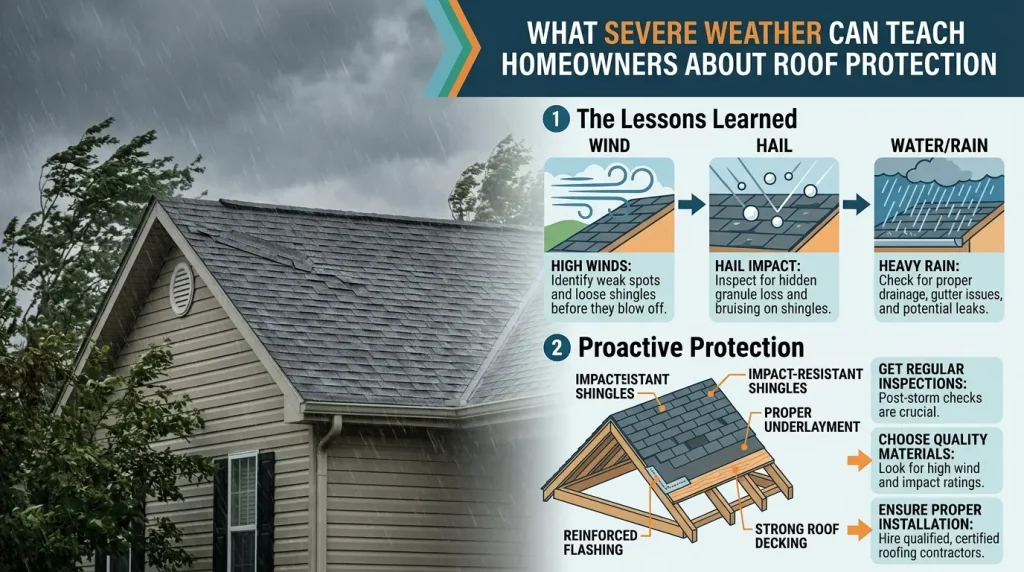
Extreme weather events have become an increasing concern for homeowners across many parts of the country. Heavy rain, high winds, hailstorms, and sudden temperature swings all place significant stress on residential roofing systems. While roofs are designed to withstand the elements, repeated exposure to severe weather can gradually weaken materials and create vulnerabilities that often go unnoticed until damage becomes visible indoors.
For homeowners, understanding how storms affect roofing systems is one of the best ways to avoid expensive repairs and protect long-term property value. Preventative care, timely inspections, and informed repair decisions can help reduce the impact of unpredictable weather conditions.
Why Storm Damage Often Goes Undetected
One of the biggest challenges with roof damage is that it is not always immediately obvious. After a major storm, a roof may appear intact from the ground while hidden damage continues to worsen beneath the surface.
Wind can loosen shingles without completely removing them. Hail may create small fractures that weaken protective layers over time. Water intrusion can begin slowly and remain unnoticed until stains appear on ceilings or walls.
Because roofing systems function as interconnected structures, even minor weaknesses can eventually lead to broader issues affecting insulation, ventilation, and structural integrity.
The Most Common Types of Storm-Related Roof Damage
Different weather conditions create different forms of roofing stress. Understanding these patterns can help homeowners recognize warning signs earlier.
Wind Damage
Strong winds are capable of lifting shingles, damaging flashing, and exposing vulnerable underlayment. Once protective materials are displaced, moisture can enter the roofing system more easily.
Signs of wind damage may include:
- Missing shingles
- Raised or curled shingle edges
- Loose gutters
- Debris accumulation
- Exposed roof decking
Even if only a few shingles appear affected, the surrounding materials may also have weakened seals.
Hail Impact
Hail damage is particularly difficult to identify without close inspection. Small impacts can bruise shingles, dislodge granules, and shorten the lifespan of roofing materials.
Granule loss reduces the roof’s ability to protect against UV exposure and moisture intrusion. Over time, damaged areas may crack or deteriorate faster than surrounding sections.
Water Intrusion
Heavy rain can expose weaknesses in flashing, valleys, vents, and roof penetrations. Once moisture enters the roofing system, it may spread into insulation, drywall, or attic spaces.
Warning signs inside the home often include:
- Ceiling discoloration
- Peeling paint
- Mold or mildew odors
- Increased indoor humidity
- Soft drywall areas
Quick response is important because prolonged moisture exposure can create secondary structural issues.
Why Timing Matters After a Storm
One common mistake homeowners make is delaying inspections after severe weather. Even if there are no visible leaks, hidden damage may continue worsening with each rainfall or temperature change.
Prompt inspections provide several advantages:
- Small issues can often be repaired before becoming major problems.
- Documentation may assist with insurance claims if applicable.
- Early repairs help preserve the overall lifespan of the roof.
- Moisture intrusion can be addressed before mold develops.
Professional assessments are especially valuable after hailstorms or high-wind events where surface-level inspections may miss underlying damage.
Preventative Steps That Improve Roof Resilience
While no roof is immune to severe weather, certain maintenance practices can significantly improve durability.
Schedule Routine Roof Inspections
Routine inspections allow homeowners to identify aging materials, loose flashing, drainage issues, and ventilation concerns before storms create additional damage.
Inspections are particularly important for roofs older than 10 years or properties located in regions with frequent severe weather activity.
Keep Gutters and Drainage Systems Clear
Blocked gutters can force water to back up beneath shingles or pool around roof edges. Regular cleaning improves drainage and helps prevent water infiltration during heavy rainfall.
Homeowners should also check that downspouts direct water safely away from the foundation.
Address Minor Repairs Quickly
Small roofing problems rarely remain small for long. Replacing a few damaged shingles or resealing flashing early is usually far less expensive than repairing water damage later.
Ignoring minor deterioration often accelerates overall roof aging.
How Climate Conditions Influence Roofing Decisions
Regional climate patterns play a major role in roofing material performance. Areas that experience intense storms, high humidity, or frequent hail require roofing systems designed for those environmental conditions.
For homeowners researching regional roofing concerns and maintenance considerations,Austin storm damage roof repair offers additional context about how roofing systems are affected by changing weather patterns and severe storm activity.
Understanding how local conditions influence roof performance can help homeowners make more informed decisions about repairs, maintenance schedules, and future upgrades.
Choosing Materials Designed for Severe Weather
Modern roofing products offer a wide range of durability features that can improve storm resistance.
Impact-Resistant Shingles
Some shingles are specifically engineered to withstand hail impacts and debris strikes more effectively than traditional materials.
These products may help reduce damage during severe storms while extending roof lifespan.
Metal Roofing Systems
Metal roofing has gained popularity in storm-prone regions because of its durability and wind resistance. Properly installed metal systems can perform well under heavy rain and strong winds.
Additionally, many metal roofs reflect heat efficiently, which may improve energy performance.
Enhanced Underlayment Systems
Advanced synthetic underlayments provide an extra layer of moisture protection beneath roofing materials. These systems can help limit water intrusion if shingles become damaged during storms.
When Repairs Are No Longer Enough
Although repairs can resolve many roofing problems, there comes a point when replacement becomes the more practical long-term solution.
Homeowners should consider a full evaluation if the roof shows:
- Widespread shingle deterioration
- Repeated leaks
- Sagging areas
- Significant storm damage
- Extensive granule loss
- Aging materials nearing the end of their lifespan
A well-planned replacement can improve energy efficiency, weather resistance, and overall property protection.
Final Thoughts
Storms place enormous stress on residential roofs, often revealing weaknesses that have developed gradually over time. While severe weather cannot be avoided, proactive maintenance and informed decision-making can greatly reduce long-term damage.
By scheduling inspections, addressing repairs early, and choosing durable materials suited to local climate conditions, homeowners can improve both roof performance and peace of mind. Protecting a roof is ultimately about protecting the entire home—and preparing before the next storm arrives.
